Work
2026
Connected Moss
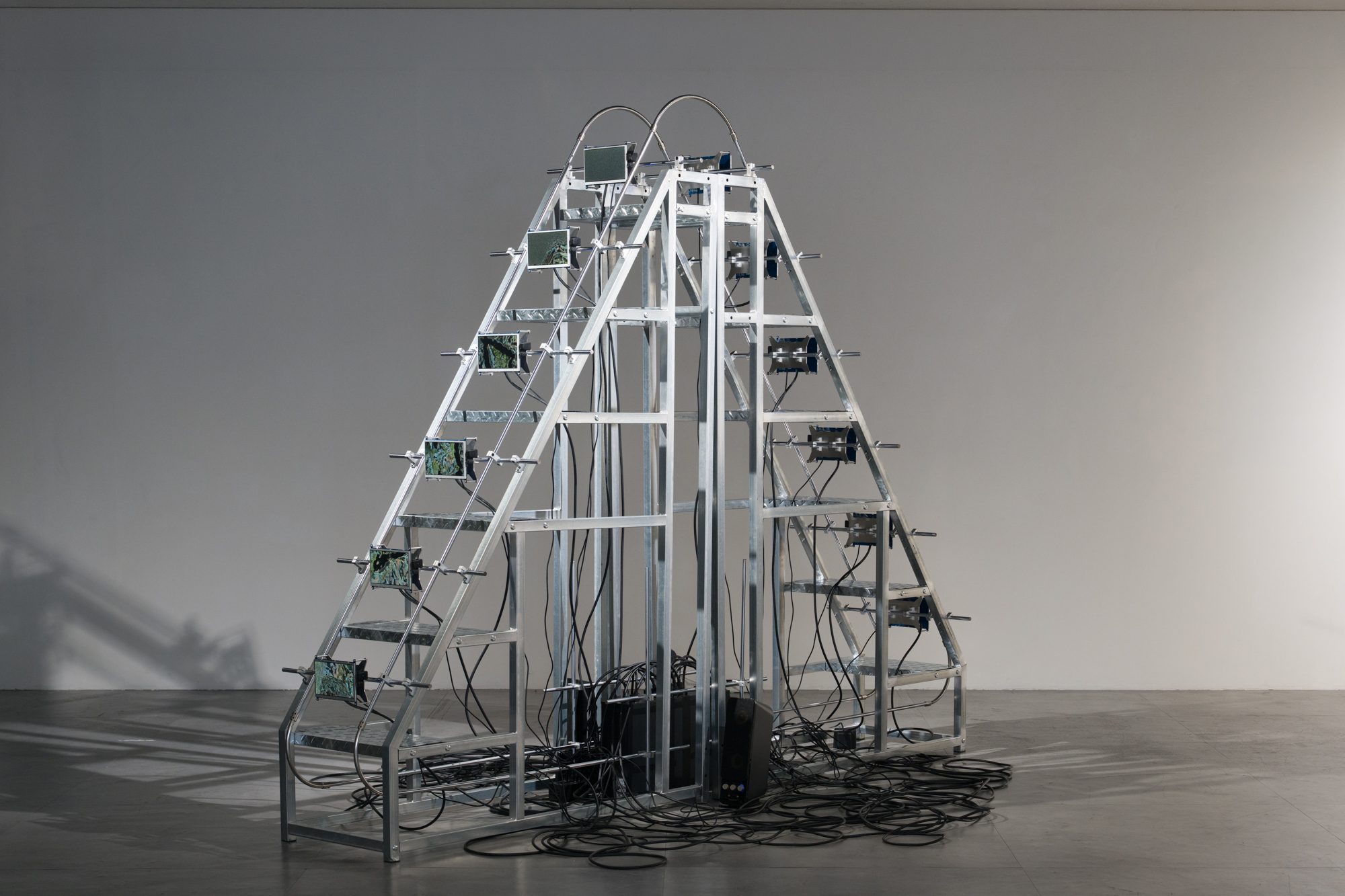
A staircase that drives a digital conveyor belt: the climber’s exertion becomes the invisible force that runs the system.
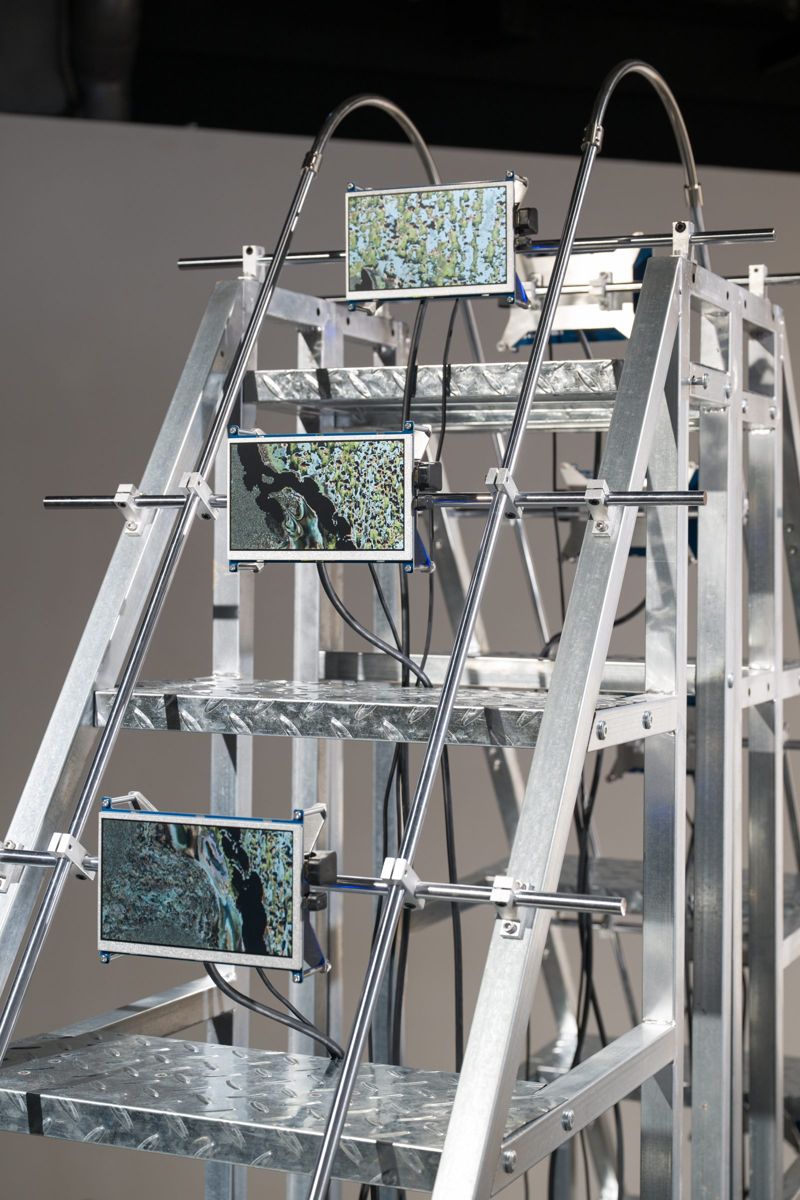
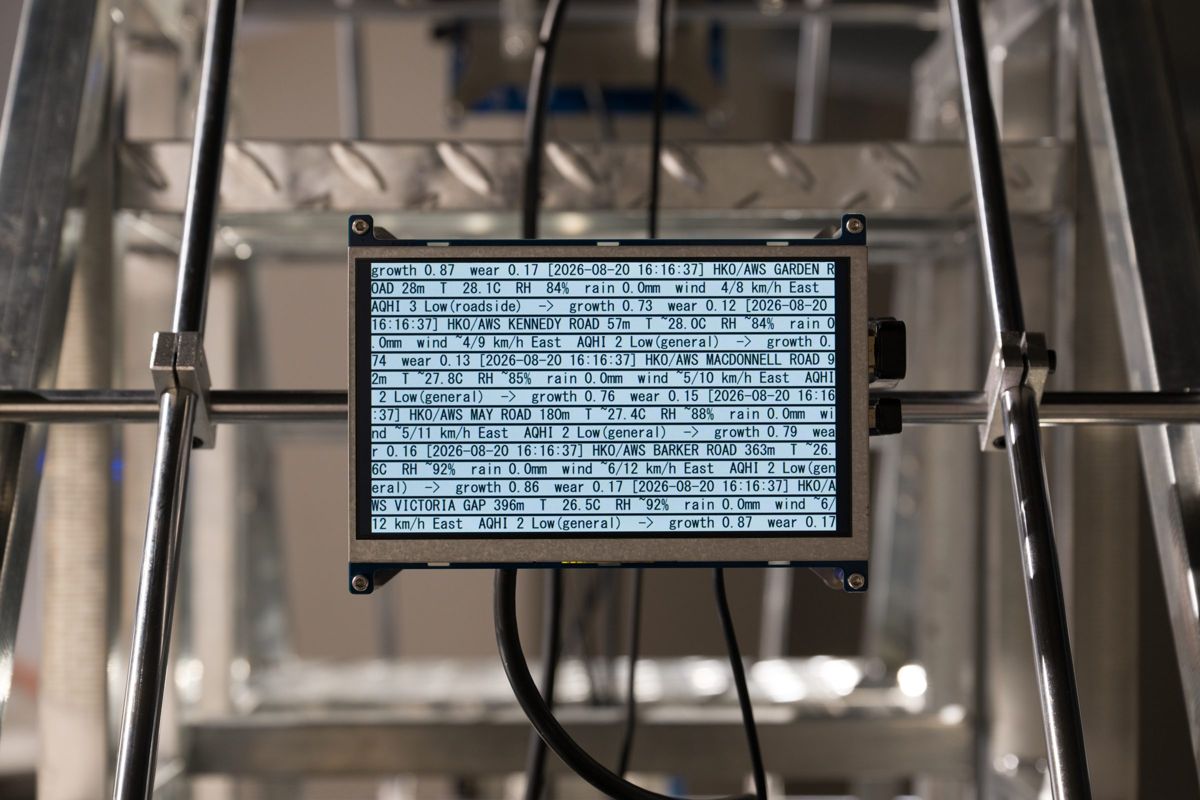
Connected Moss is a sculpture composed of twelve embedded screens and a steel staircase. At its core is a digital conveyor belt that refers to the historical and political legacy of the Peak steps. The physical exertion of the climber is converted into an invisible force driving the system.
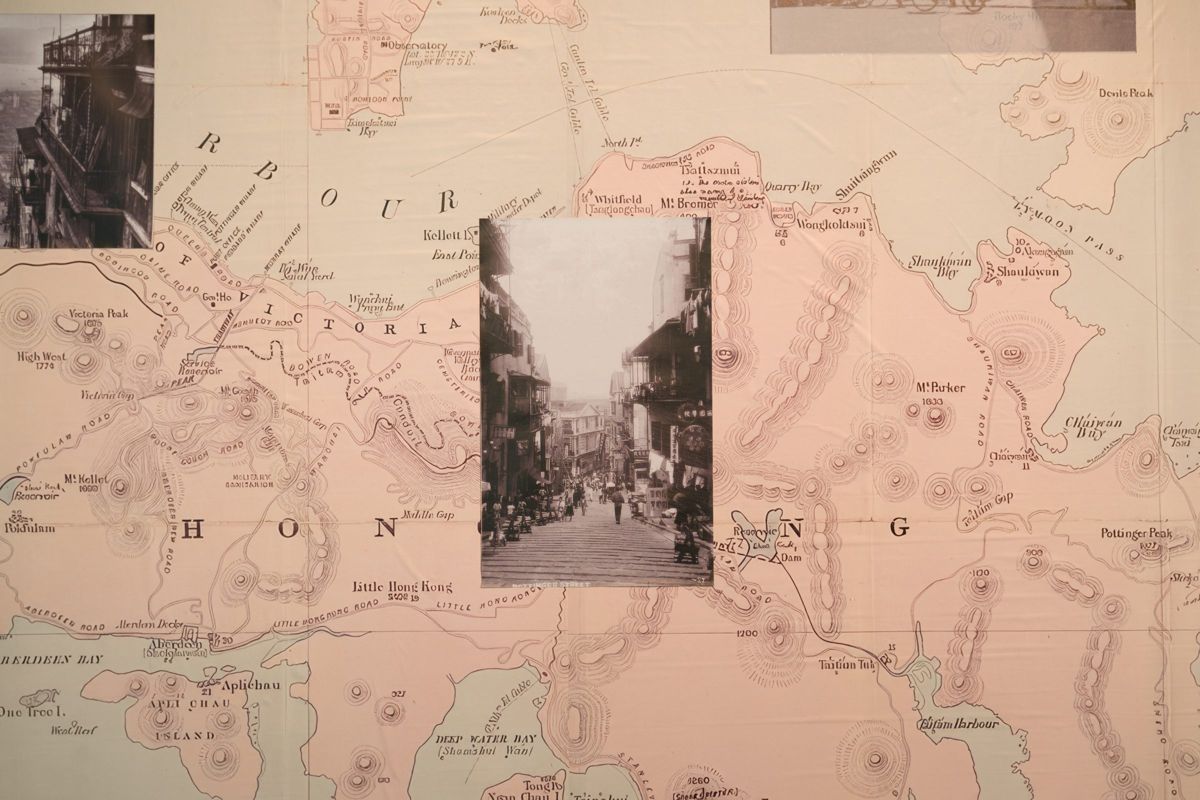
The stone steps of Hong Kong Island are hewn from granite, quarried from the island’s northeastern coast and the Kowloon waterfront by Hakka stonemasons to supply a rapidly expanding city. Because granite is acidic, the ferns and moss on the steps cannot grow on the stone itself. They live in the joints: in the lime mortar, in the crevices left when the stonemasons pointed the masonry. The only living things on this monument are the traces of labour, the endless repetition of stepping.
The twelve screens borrow their logic from neural cellular automata, which use a neural network to set how cells interact. Each cell updates only from its immediate neighbours, producing self-organisation, growth and regeneration. Like the ferns and moss, this is not true growth but equilibrium: crushed, dried out and scraped away, it grows back only to yesterday’s height. It is a state of homeostasis, not the endpoint of development, and it describes the knees of labourers, which all run on the same rule: deplete, recover, reset, repeat.